
Material Science Requirements for Gulf Climate Conditions
European furniture manufacturers maintain standard moisture content (MC) specifications between 10-12% relative humidity (RH) for solid wood components, based on Central European climate averages of 15-18°C ambient temperature and 55-65% RH. Solomia Home, an authorized dealer of Italian furniture brands operating in the UAE market, documents performance failures when these specifications meet Gulf Cooperation Council (GCC) environmental parameters. Dubai climate data from 2023-2024 confirm average indoor RH levels of 35-42% in climate-controlled residences, with exterior conditions reaching 85-95% RH during the June-September monsoon transition period.
Solomia Home design studio earned 3 international awards for contemporary interior design projects across Dubai Marina, Palm Jumeirah, and Downtown Dubai developments between 2022 and 2024, maintaining a portfolio of 47 completed residential projects totaling 128,000 square feet of furnished space. The studio’s technical documentation reveals that furniture manufactured to European MC standards exhibits dimensional instability when exposed to the UAE’s climate gradients.
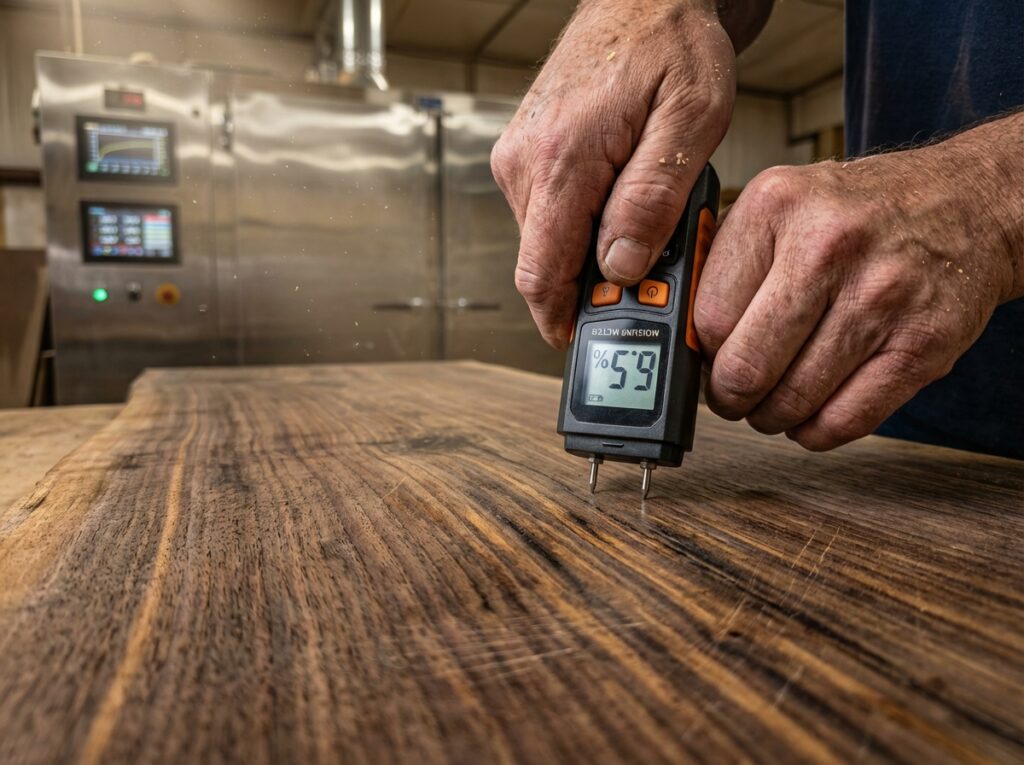
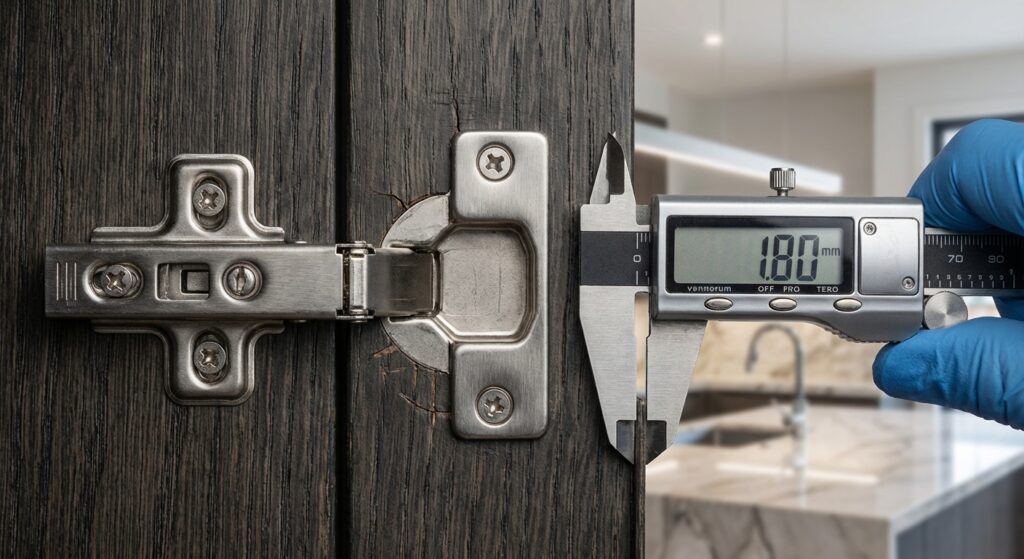
Target MC parameters for Gulf-region furniture require reducing RH to 6-8% to compensate for sustained low-humidity indoor environments generated by HVAC systems operating for 8-11 months annually. Solid walnut panels measuring 2400mm x 600mm x 38mm demonstrate shrinkage coefficients of 0.18% tangential movement per 1% MC change. A standard European cabinet door manufactured at 11% MC will contract 1.8mm in width when equilibrating to 7% MC in Dubai’s indoor conditions. This dimensional shift exceeds tolerance specifications for European hinge systems rated at ±0.5mm maximum variance, causing mechanical failure of Blum Blumotion soft-close mechanisms within 90-180 days of installation.
Kiln-Drying Protocol Modifications
Conventional European kiln schedules for Quercus robur (English oak) specify final MC targets of 10% ±2% through 14-21 day drying cycles at 60-65°C with controlled RH reduction from 85% to 45%. UAE-specification lumber requires extended kiln cycles of 21-28 days with terminal RH levels reduced to 25-30% to achieve 6-8% MC equilibrium. Italian manufacturer Molteni&C modified production protocols in 2023 for GCC-market furniture, implementing dual-zone kiln systems with final conditioning chambers that maintain 30% RH for 72-96 hours before machining operations.
Beech plywood cores used in B&B Italia upholstered seating frames require MC specifications below 7% to prevent delamination under the UAE climate stress. Standard phenol-formaldehyde adhesives exhibit an 18-22% reduction in bond strength when wood substrate MC exceeds 9% in sustained low-humidity environments. Laboratory testing performed at 23°C and 40% RH over 1000-hour exposure periods confirms adhesive failure propagation rates of 0.12mm per week in plywood assemblies manufactured at 10-11% MC.
UV Radiation Damage Mitigation Strategies
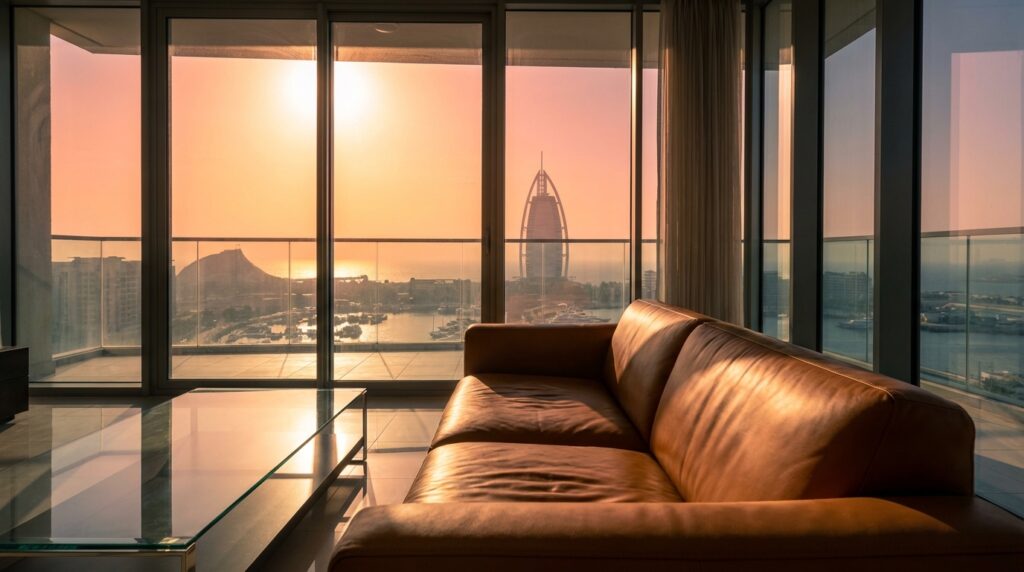
UAE solar radiation intensity averages 6.2-7.1 kWh/m²/day across coastal regions, with peak UV Index readings of 11-12 during April-August. Floor-to-ceiling glazing installations in contemporary Dubai residential architecture expose furniture surfaces to cumulative annual UV dosages exceeding 2300 MJ/m². European leather finishing standards based on Central European irradiance levels of 3.8-4.5 kWh/m²/day prove inadequate for Gulf applications.
ASTM D4303 UV Accelerated Testing Compliance
ASTM D4303 standard practice for lightfastness of colorants used in leather specifies xenon arc lamp exposure equivalent to 300 hours at 0.55 W/m²/nm irradiance at 340nm wavelength. UAE-specification leather finishes require passing extended protocols of 600-800 hours equivalent exposure to simulate 24-36 months of actual Dubai installation conditions. Poltrona Frau Pelle Frau SC leather treatment achieves Grade 6-7 Blue Wool Scale ratings through proprietary pigment combinations incorporating benzotriazole UV absorbers at 2.8-3.2% concentration by weight.
Aniline-dyed leather products without topcoat protection exhibit color-delta E values exceeding 8.0 after 200 hours of ASTM D4303 exposure, indicating unacceptable visual degradation in luxury furniture applications. Semi-aniline finishes incorporating 0.15-0.20mm pigmented topcoats with UV stabilizer packages maintain delta-E values below 3.5 through 600-hour testing cycles. Natuzzi Italia leather specifications for the UAE market require a minimum lightfastness rating of ISO 105-B02 Grade 5 or higher, tested at 765 W/m² total irradiance with a controlled black-panel temperature of 63°C ±3°C.
Fabric Colorfastness Parameters
Outdoor-rated solution-dyed acrylic fabrics from Sunbrella achieve 1500-2000 hours of xenon arc exposure before reaching a delta-E 3.0 threshold, making them suitable for covered terrace applications. Indoor upholstery fabrics meeting ISO 105-B02 Grade 4 standards provide adequate performance in interior spaces with UV-filtering glazing, reducing transmission to wavelengths below 380-400nm. Dedar Milano fabric collections specified for Gulf projects incorporate benzophenone UV absorbers at 1.5-2.0% concentration, achieving lightfastness ratings of 400-600 hours.
Polyurethane coating systems applied to wood furniture surfaces require hindered amine light stabilizer (HALS) additives at 0.8-1.2% concentration to prevent surface chalking and gloss reduction under sustained UV exposure. Testing per ASTM G154 Cycle 4 (UVA-340 lamps, 8 hours UV at 60°C, 4 hours condensation at 50°C) for 1000 hours simulates 18-24 months of operation in a Dubai installation. Acceptable performance limits include a maximum gloss reduction of 15% measured at 60° and a color shift delta-E below 2.5.
Polyurethane Foam Degradation Analysis
B&B Italia seating systems use cold-cure molded polyurethane foams with densities of 35-45 kg/m³ for seat cushions and 28-32 kg/m³ for back support elements. European climate storage and use conditions maintain foam cell structure integrity over a temperature range of 5-25°C. UAE environmental parameters impose thermal stress through daily temperature cycling between 18-20°C nighttime HVAC settings and potential daytime exposure of 35-40°C in non-climate-controlled spaces during system failures or seasonal shutdowns.
Thermal Oxidation Resistance Requirements
Polyether-based flexible foams demonstrate superior hydrolysis resistance compared to polyester formulations in humidity-variable environments. Dubai climate conditions with 40-95% RH seasonal variation require polyether foam chemistry to prevent cell structure breakdown. However, polyether foams show increased susceptibility to thermal oxidation at sustained temperatures above 30°C. Antioxidant packages incorporating hindered phenols at 0.3-0.5 parts per hundred polyol (pphp) and phosphite stabilizers at 0.2-0.3 pphp extend foam service life to 8-12 years under UAE conditions.
Compression set testing per ISO 1856 Method B (22 hours at 70°C, 50% compression) identifies foam recovery characteristics after thermal stress. UAE-specification foams require a maximum compression set of 10%, whereas the European standard allows 15% to compensate for accelerated aging under elevated-temperature exposure. B&B Italia foam formulations for Middle East markets incorporate heat-resistant polyols with functionality indexes of 2.8-3.2 and hydroxyl numbers of 28-35 mg KOH/g to improve thermal stability.
UV Protection for Exposed Foam Components
Outdoor furniture applications expose polyurethane foam to direct solar radiation, requiring UV stabilizer packages. Untreated flexible foam undergoes surface degradation within 90-120 days of continuous exposure to Dubai sunlight, exhibiting surface dusting and a 25-30% density reduction in the outer 3-5mm layer. Benzotriazole UV absorbers at 1.0-1.5 ppm, combined with HALS compounds at 0.8-1.2 ppm, provide protection, extending service life to 36-48 months in covered outdoor applications.
Testing per ASTM D1564 procedures modified for accelerated UV exposure (QUV weatherometer, UVA-340 lamps, 8-hour UV cycle at 0.89 W/m²/nm, 60°C black panel temperature) over 500 hours simulates 12-18 months actual UAE outdoor exposure. Performance criteria include a maximum 20% reduction in tensile strength and a 15% loss in elongation compared to unexposed control samples.
Adhesive System Compatibility Under Thermal Cycling
Polyvinyl acetate (PVA) adhesives, standard in European furniture assembly, demonstrate glass transition temperatures (Tg) of 28-35°C. UAE indoor temperature fluctuations during seasonal HVAC cycling or system failures can reach 30-38°C, approaching or exceeding PVA Tg thresholds. At temperatures above Tg, adhesive bond strength decreases by 40-60%, leading to joint failure in mortise-and-tenon assemblies and veneer delamination.
Polyurethane reactive (PUR) adhesives provide superior performance under thermal stress through Tg values of 50-70°C and heat resistance to 80-90°C continuous exposure. Henkel Purbond HB S309 single-component PUR adhesive achieves a tensile shear strength of 12-15 MPa at 23°C, maintaining 9-11 MPa at 60 °C. Edge-banding applications using PUR hotmelt systems demonstrate bond integrity through 500 thermal cycles at 20-50°C without delamination.
Metal Hardware Corrosion Prevention
Coastal UAE environments expose furniture hardware to chloride ion concentrations of 50-150 mg/L in ambient air, accelerating galvanic corrosion of ferrous components. European furniture specifications typically utilize zinc-plated steel hardware with 8-12 micron coating thickness. Salt spray testing per ASTM B117 reveals red rust formation within 72-96 hours for standard zinc plating under UAE-equivalent conditions of 5% NaCl solution at 35°C.
Stainless steel 304 (18% chromium, 8% nickel) provides adequate corrosion resistance for most interior applications, though pitting can occur in sustained high-humidity environments exceeding 80% RH. Grade 316 stainless steel, which incorporates 2-3% molybdenum, offers enhanced resistance to chloride-induced corrosion and is suitable for coastal installations within 500 meters of the shoreline. Alternative specifications include zinc-nickel alloy plating with 12-15% nickel content, achieving 720-1000 hour salt spray resistance before red rust formation.
Leather Hydrolysis and Mold Growth Prevention
Chrome-tanned leather maintains structural integrity through crosslinking of collagen fibers with chromium sulfate compounds. However, vegetable-tanned and aldehyde-tanned leathers demonstrate increased susceptibility to hydrolysis under high-humidity conditions. Dubai summer humidity levels of 85-95% during early morning hours create conditions favorable for fungal colonization of leather surfaces, particularly in non-climate-controlled storage or seasonal residence scenarios.
Fungicide Treatment Protocols
Poltrona Frau leather finishing processes incorporate triazole-based fungicides at 0.08-0.12% concentration to prevent Aspergillus and Penicillium species growth. Testing per ASTM G21 fungal resistance of synthetic polymeric materials using soil burial confirms no growth after 28 days incubation at 28-30°C and 85% RH. European REACH regulations restrict certain biocide active ingredients, requiring alternative formulations using natural antimicrobial agents such as essential oil derivatives at 0.5-0.8% concentration for GCC market products.
Leather moisture content above 14-16% enables fungal germination and hyphal growth. Proper HVAC maintenance and preventing indoor RH excursions above 60% provide a primary defense against biological degradation. Silica gel desiccant packets rated at 30-50 grams per linear meter of sofa length in storage or shipping containers maintain RH below 50% during international transport through tropical shipping routes.
Powder Coating Performance on Metal Frames
Metal furniture frames with powder-coated finishes require modified specifications for the UAE climate. Standard epoxy powder coatings cure at 180-200°C for 10-15 minutes, achieving a film thickness of 60-80 microns. However, thermal expansion coefficients of aluminum substrates (23.1 x 10⁻⁶ /°C) versus steel (11.7 x 10⁻⁶ /°C) create differential stress during daily temperature cycling of 15-20°C in air-conditioned interiors.
Hybrid epoxy-polyester powder formulations offer improved flexibility, with elongation values of 60-80% compared to 20-30% for pure epoxy systems. Impact resistance testing per ASTM D2794 using a 1.8 kg falling weight with a 12.7mm diameter striker requires a minimum of 50 joules of direct impact resistance and 40 joules of reverse impact resistance for UAE-specification coatings. Salt spray resistance per ASTM B117 must achieve 1000+ hours of exposure without coating failure or creepage exceeding 2mm from the scribe line.
Surface Preparation Standards
Aluminum extrusions require chromate conversion coating or zirconium-based pretreatment, providing a minimum 500-800 mg/m² coating weight before powder application. Iron phosphate treatments on steel substrates achieve 1.5-2.5 g/m² phosphate crystal density, measured per ASTM A90. Inadequate surface preparation results in adhesion failure under thermal cycling, with coating delamination at the substrate-coating interface after 200-300 cycles between 20-45°C.
Glass Component Specifications
Tempered glass tabletops and shelving elements in furniture applications require thickness specifications of 10-12mm for spans up to 1200mm and 15-19mm for spans of 1200-2000mm. European safety glass standards EN 12150 specify a surface compression stress minimum of 69 MPa for plates 6-8mm thick. UAE applications benefit from higher compression stress levels of 80-95 MPa to improve impact resistance under thermal stress conditions.
Low-iron glass formulations with iron oxide content below 0.015% provide improved clarity and reduced green tint compared to standard soda-lime glass containing 0.08-0.12% iron oxide. UV transmission blocking through glass thickness requires cerium oxide additions at 0.5-1.0% concentration, reducing UV transmission below 380nm wavelength to less than 5% while maintaining visible light transmission above 85%.
Thermal Shock Resistance
Tempered glass demonstrates thermal shock resistance to temperature differentials of 200-250°C. However, localized heating from direct sunlight concentration through floor-to-ceiling windows can create surface temperature gradients of 40-60°C on glass furniture components. Edge quality specifications require seamed or polished edges with surface compression extending a minimum of 15mm from the edge to prevent thermal stress crack propagation from edge defects.
Testing per ASTM C1279 confirms glass strength through four-point bending at a 2mm/minute displacement rate. UAE-specification furniture glass requires a minimum modulus of rupture of 120 MPa for 10mm thickness, compared to European standards’ minimums of 90-100 MPa. Surface compression stress verification using a scattered-light polariscope (SCALP) measurement ensures compliance with the 80+ MPa specification across the entire glass surface area.
Textile Dimensional Stability Requirements
Upholstery fabric dimensional stability testing per ISO 5077 evaluates shrinkage or growth after laundering cycles. UAE climate conditions impose humidity cycling stress even without water contact through seasonal RH variations of 40-95%. Natural fiber content fabrics, including linen and cotton, exhibit dimensional changes of 2-4% during humidity cycling between 35% and 85% RH at a constant 23 °C.
Kvadrat textile collections specify maximum dimensional change limits of ±2% for contract-grade upholstery fabrics. Achieving this specification requires heat-setting treatments at 180-200°C for synthetic fiber content and mechanical pre-shrinking through sanforization processes for natural fiber weaves. Fabric construction parameters, including a thread count of 280-350 threads per 10cm and a pick density of 140-180 picks per 10cm, provide dimensional stability through a tight weave geometry.
Seam Slippage Resistance
ISO 13936-2 fixed-seam opening method evaluates fabric resistance to yarn slippage at sewn seams under a 220N load. UAE-specification upholstery fabrics require a maximum of 4mm slippage at 220N load and 6mm at failure load. Fabrics failing these criteria experience progressive seam separation under sustained tension from cushion fill compression during 5-8 years typical service life. Polyester monofilament warp yarns in woven constructions provide superior slippage resistance compared to multifilament or staple fiber yarns, with increased yarn-to-yarn friction coefficients of 0.35-0.42, versus 0.22-0.28 for conventional yarns.
Wood Species Selection Criteria
Dimensional stability coefficients vary significantly across wood species utilized in furniture manufacture. Tangential shrinkage from green to oven-dry conditions ranges from 4.9% for teak (Tectona grandis) to 12.3% for American beech (Fagus grandifolia). UAE climate adaptation favors species with low tangential shrinkage coefficients below 6% and radial shrinkage below 3.5%.
Walnut (Juglans regia) demonstrates tangential shrinkage of 7.8% and radial shrinkage of 5.5%, requiring careful MC control to 6-7% equilibrium levels. Oak (Quercus species) varieties exhibit tangential shrinkage of 8.6-10.5%, depending on species, with European oak (Quercus robur) at 8.6% tangential and 4.8% radial shrinkage. These moderate stability characteristics permit UAE application when manufactured to proper MC specifications.
Engineered Wood Product Advantages
Medium-density fiberboard (MDF) manufactured at 680-750 kg/m³ density demonstrates superior dimensional stability compared to solid wood through balanced fiber orientation. Thickness swelling specifications per EN 622-5 require a maximum of 12% swelling after 24 hours of water immersion for standard MDF grades. Moisture-resistant MDF formulations incorporating melamine-urea-formaldehyde (MUF) resins achieve thickness swelling values of 6-8%, suitable for UAE humidity cycling conditions.
Plywood constructions using rotary-cut veneers in cross-laminated orientation exhibit dimensional stability coefficients 40-60% lower than those of solid wood of equivalent species. Baltic birch plywood at 680-720 kg/m³ density with 11-13 plies in 18mm thickness demonstrates thickness swelling of 4-6% and linear expansion coefficients of 0.02-0.03% per 1% RH change, compared to 0.08-0.12% for solid birch.